Pre-Harvest Treatments with Naturally Derived Substances to Improve Cherry Production and Address Climate Change
This technology offer aims to provide cherry producers with natural and sustainable pre-harvest tools to facilitate farm management while reducing the impact of climate change. The technology makes it possible to alter the fruit ripening rate, allowing cherries to be harvested in stages. It increases yields and reduces the impact of abiotic stress caused by climate change, and can also be used in organic farming.
 |
 |
TECHNOLOGY DESCRIPTION
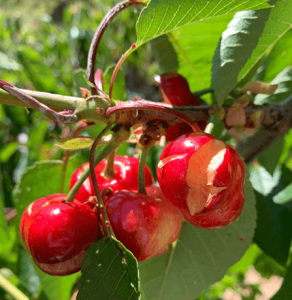
The Research Group has been working since its inception on the optimisation and development of cherry cultivation in the Valencian Community and Murcia through the application of natural substances. These substances are naturally present in the plant and are capable of triggering metabolic changes that modify the ripening rate. Cherries are a highly seasonal crop with very short harvesting periods. Climate change also causes changes in fruit ripening patterns and leads to the occurrence of intense and intermittent rainfall which, in the case of many varieties, coincides with advanced phenological stages. Rainfall at these stages of development compromises the integrity of the cherries, causing cracking and resulting in significant economic losses year after year.
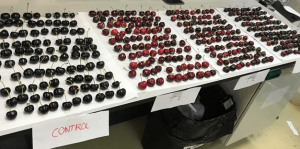
In recent years, we have applied our knowledge to adapting this crop to new climatic conditions. To this end, a technology has been developed for applying these compounds to different cherry varieties which, in addition to increasing fruit weight and improving post-harvest quality, delays ripening, allowing farms to be managed more effectively when organising fruit harvesting.
The number of applications required and the appropriate application timing and dosage have been established for early- and late-harvesting varieties, assessing the impact of this technology on each of them.
TECHNOLOGY APPLICATIONS
For this seasonal fruit, harvesting and marketing take place within a specific time window. This can lead to saturation problems for producers during harvesting, as well as for markets and distribution logistics, while also affecting the prices achieved for the fruit. Therefore, delaying the harvesting date could lead to lower market saturation and higher prices.
In addition, it allows agricultural producers to optimise crop management by facilitating staggered harvesting and reducing the impact of climate change on crops. All these applications could provide an economic benefit to the producer sector at the time of marketing.
ADVANTAGES AND INNOVATIVE ASPECTS
To date, different applications using different compounds have been tested by various researchers in an attempt to reduce the effects of abiotic stress intensified by climate change in these fruits. However, either the results have not been conclusive or they have had negative impacts on the trees, such as reduced yields in subsequent production cycles.
The state of the art of this technology developed by our Research Group has shown no negative effects on production systems, while its effects on production have become increasingly established year after year of study. These effects translate into advantages and innovative aspects such as an effective reduction in fruit cracking and delayed ripening in cherries, in addition to improved post-harvest quality. Both effects are key tools for producers when addressing climate change.
Furthermore, it meets consumer demand for natural and sustainable production technologies, minimising the environmental impact while obtaining products with a higher content of certain bioactive compounds.
DEVELOPMENT STAGE
TRL 5-6. The technology has already been validated on experimental farms over several years and is currently undergoing verification on commercial farms, demonstrating its effectiveness in real production environments.
APPLICATION SECTORS
- Stone Fruit Producers (especially cherries).
- Agricultural Cooperatives and Purchasing Centres.
- Food Logistics and Distribution Companies.
- Plant Fortifiers and Biostimulant Industry.
- Organic Farming Certification Bodies.
PRINCIPAL INVESTIGATOR
Fabián Guillén Arco – University Institute for Research and Innovation in Agri-Food and Environmental Sciences (CIAGRO)