Valorisation of Plant Waste for Use as a Construction Material
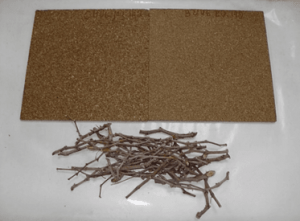
Building construction has a significant impact on the global environment through the energy consumed during construction, use and demolition, as well as the energy required to provide buildings with essential services and the embodied energy of the materials used. Agriculture generates waste that is not always managed appropriately from an environmental or economic perspective. Deforestation also highlights the need to find suitable alternatives to timber. Plant waste consists of lignocellulosic fibres, similar to those found in wood, which can be used in construction components.
 |
 |
TECHNOLOGY DESCRIPTION
TECHNOLOGY APPLICATIONS
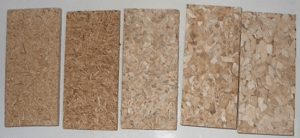
The panels produced have been tested in accordance with the applicable European standards, with promising results for use in the construction sector, including:
- Furniture
- Building partitions
- Interior cladding
- Joinery
- Thermal insulation
- Acoustic insulation
- Fire-resistant components
ADVANTAGES AND INNOVATIVE ASPECTS
The particleboards being developed require less energy to manufacture than conventional industrial boards. Commercial particleboards manufactured using conventional dry processes typically require the raw material to be air-dried, crushed and then dried in industrial dryers. These processes generally use temperatures of 180–200°C and pressures of around 3.5 MPa. They also commonly use urea-formaldehyde adhesives, which may pose carcinogenic risks and are subject to increasingly strict restrictions.
- The particleboards manufactured by our research team have the following characteristics:
- Crushing requires the same or less energy, as plant waste is easier to crush than the trunks of tree species.
- Pressing takes place at temperatures of 110–150°C and pressures of 2.1–2.6 MPa.
- Natural binders such as lignin, starch and citric acid are used to bind the particles, producing a fully biodegradable material.
Using plant waste to manufacture particleboards therefore offers two key advantages: significant environmental benefits and lower energy consumption during production compared with conventional industrial processes.
DEVELOPMENT STAGE
APPLICATION SECTORS
- Construction Industry and Sustainable Architecture.
- Furniture Industry and Interior Design.
- Agricultural Waste Management Companies.
- Insulation Material Manufacturers.
- Packaging Industry and Eco-Friendly Packaging Solutions.